Tuesday, September 16, 2025
Getting copies of A Winter Solstice Singing Ritual in the US
Thursday, September 23, 2021
On-line Winter Solstice Singing starts in early October!
![]() |
| [image: candles in the dark] |
On-line Winter Solstice Singing starts in early October!
Sign up here:
https://forms.gle/pi7i1GephusuArJh8
Starting on the first Sunday in October, I'll be hosting on-line song-learning sessions / rehearsals for an on-line Winter Solstice Celebration (a presentation of A Winter Solstice Singing Ritual).
There will be regular sessions from October to December that build on each other, leading up to the Celebration on 18th December.
You are invited to participate in the Winter Solstice Celebration whether you sing or not -- but if you'd like to learn the songs in advance, including harmonies, please sign up!
You also do not need to commit to the Celebration to come learn songs. Maybe you just want to come learn songs and sing! (You can also decide later.)
We will meet once a week. If needed or preferred, I will record rehearsals for those who can't join us live and for anyone who wants to go back over the rehearsal during the week; these will be shared privately. There will also be a variety of learning resources available between sessions for your work on your own.
Everyone is welcome, regardless of experience singing or ability to read music. There are easier pieces and more challenging pieces -- a little something for everyone.
== Song-learning sessions ==
...will run on Sundays from 3rd October through 12th December, each week building on the week before.
We'll cover the sing-along songs, of course, including harmonies, but also the "performance" songs as well. (If you'd like more information on the specific songs, please go to https://bit.ly/WinterSolsticeCelebrations and click on "Songs.")
* Song-learning sessions will run from 7-9 pm Edinburgh/UK time, and are open to anyone, regardless of geographic location.
* You can check what time that is for you here:https://www.timeanddate.com/worldclock/converter.html.
* You don't need a copy of the book or CD in order to participate, although they're helpful to have. More on that below.
== Schedule: ==
* Song-learning sessions/rehearsals Sundays, 3rd October - 5th December, 7-9 pm Edinburgh/UK time; not sure yet about 28th November
* Complete read-through and sing-through, Sunday, 12th December, 7-9 pm UK time
* Winter Solstice Celebration, Saturday, 18th December, 7-9 pm Edinburgh/UK time
== Copies of the book and CD ==
You do not need to own a copy of this in advance, but the book contains all the sheet music, and the CD contains full recordings of all 15 pieces, as well as teaching tracks for 8 (as well as the text for the full Celebration), so it's very, very useful.
If you live in Europe and would like a copy for £14 + postage, you can get one from me.
If you live in the US and want a copy, the person to contact is my co-author Julie Forest Middleton; I can put you in touch.
== How do I know without knowing more about the music itself? ==
The songs are a mix of rounds, well-known songs, spirituals, feminist spirituality chants and Pagan chants, and a couple of choral pieces.
There's detailed information about every song at https://bit.ly/WinterSolsticeCelebrations; click on "Songs."
I'm looking forward to singing with people from a wide range of places in the Northern Hemisphere!
== Open to people of all genders ==
Both the choir and the Celebration are open to people of all genders. Transgender, non-binary, genderqueer, and agender people are explicitly welcome.
* The music I have is written mostly in treble clef and is labeled for sopranos and altos, but I've worked with tenors and basses in addition for several years, and these pieces adapt well for lower voices as well. I teach "Line 1," "Line 2," "Line 3," etc.
* Anyone can sing any part that works for their voice on any song. You might sing one line for one piece, and a different line on another. You can also choose to sing the same line on all the songs if that's what works for you. We have lots of flexibility.
If you have any other questions, please let me know.
If you'd like to sign up for the song-learning sessions, please click here:
https://forms.gle/pi7i1GephusuArJh8
Please share widely!
![]() |
| cover of A Winter Solstice Singing Ritual book |
Thursday, September 16, 2021
Upcoming events: Winter Solstice Celebration; Winter Solstice singing
I am excited to share a few bits of news!
- Winter Solstice Celebration (on-line): Save the date!
- Winter Solstice Singing (on-line song-learning sessions)
Winter Solstice Celebration (on-line): Save the date!
This year I am hosting a presentation of A Winter Solstice Singing Ritual on-line again.
Saturday, December 18th
11 am Pacific / 2 pm Eastern / 7 pm UT / 8 pm Central Europe
Presented by Stasa Morgan-Appel (bread and roses spiritual nurture) and friends
Live Narration, Readings, and Song-Leading; pre-recorded music; available in real-time only
Pre-registration required to obtain links
If you're already on the email list, you'll receive email updates (indeed, you should have received one already); if you'd like to receive updates, you should go to the website for more information and the link: https://bit.ly/WinterSolsticeCelebrations
Winter Solstice Singing (on-line song-learning sessions)
If there's enough interest, I will host on-line song-learning sessions again this year, starting in late September.
- Sessions will be on Sunday evenings from 7-9 British Time. (You can check what time that usually is for you here: https://www.timeanddate.com/worldclock/converter.html)
- If enough people are interested but can't attend live, I will make arrangements for video recordings to be available.
- Other song-learning resources will available outside live sessions (sheet music, audio teaching tracks, audio recordings).
- Each week will build on the week before.
- To sign up or register your interest, please fill out this form:
https://forms.gle/pi7i1GephusuArJh8
These sessions are explicitly welcoming of all women and all other gender minorities, especially transgender, non-binary, genderqueer, and questioning people.
Websites
Just a reminder that the websites are:
- bread and roses spiritual nurture: https://bit.ly/StasaMA
- Winter Solstice Celebrations: https://bit.ly/WinterSolsticeCelebrations
Wednesday, October 29, 2014
Winter Solstice 2014?
I am looking for people anywhere in the world who would be interested in doing a Winter Solstice Celebration based on A Winter Solstice Singing Ritual, privately with a small group of friends / family. Think, getting together in someone's living room, using the CD or an iPod for the music, and sharing the reading. Five is a good minimum number, though I've done it with fewer -- you can do it by yourself -- and as far as I know there is no maximum number. Support and encouragement available from me.
Let me know if you're interested!
More information is available at TinyURL.com/WinterSolsticeSinging.
There's also a Facebook group for people who are involved in this project at http://www.facebook.com/groups/AWSSR/.
Sunday, October 26, 2014
Upcoming posts for Samhain: Talking about suicide
But in particular, suicide has been on my mind, and for a number of reasons: the topic for the November gathering of the Quaker Concern Around Dying and Death is sudden death and suicide; I've been having a lot of conversations with other people, especially suicide-loss survivors, about suicide; there are so many places in my life where the topic just comes up, over and over.
For quite some time now, I've wanted to post some articles, both by me and by guest authors, on the topic of suicide.
Suicide touches so many of us. But we're conditioned not to talk about it, whether we feel like we want to die, or we've tried, or someone we know or care about or love wants to die, has tried to kill themselves, or has died by suicide.
That don't-talk-about-it message makes it harder to reach out for help, harder to grieve and mourn, and harder to heal.
Over the last few years, but especially this last year, I have felt a renewed commitment to talking about suicide, particularly to being open about the fact that I'm a suicide-loss survivor. A number of people in my life, over the span of many years, have died by suicide. The most recent suicide death in my life came three years ago. In response, that part of my extended family has been very committed to talked about it, especially amongst my generation. To reach out to each other. I've also found myself talking more openly in the rest of my life, not just about that death, but about previous ones. Robin Williams' death in August also prompted a lot of discussion about suicide. And I've heard from a lot of other suicide-loss survivors, as well as from other people who have contemplated suicide.
I've had some really amazing, hard, courageous, and wonderful conversations over the last months and year with many people about suicide, being a suicide-loss survivor, and how to talk about all of this. Thank you to everyone who's been part of those. You have really helped me, and each other.
In the next week or so, I'll have several guest posts to share from people who have different kinds of experience with suicide. I hope these pieces will be helpful to you in your spiritual work approaching Samhain, and also in general.
They'll each be clearly labeled, so if you're not ready to read about suicide, you don't have to. You can also come back and read them later.
To start, I'd like to recommend some easy-to-read, thoughtful, helpful pieces by my friend Hollis Easter.
Among other things, Hollis "runs a telephone crisis hotline and teaches people how to listen, offer support, help people who think of suicide to choose life, and build lasting strength in communities." Hollis is one of the friends and colleagues I've had deep, chewy conversations with about this issue, the kinds of conversations which catalyze other work.
Here are some of Hollis' pieces I've found helpful in stumbling towards talking about this. I hope they're helpful for you, too:
- Suicide-related terminology: http://www.holliseaster.com/p/suicide-related-terminology/. This is an excellent one to start with.
- How to ask about suicide: http://www.holliseaster.com/p/ask-suicide/. Do you know someone you think might be struggling, might be thinking about suicide, but you're afraid to ask? Don't be.
- Talking about suicide and Robin Williams' death: http://www.holliseaster.com/p/talking-about-suicide-robin-williams/
- Why you shouldn’t say “suicide is a permanent solution to a temporary problem”: http://www.holliseaster.com/p/suicide-permanent-solution-temporary-problem-isnt-helpful/
There are many more fascinating, and useful, articles at Hollis' blog; I recommend exploring.
If you are struggling with suicide, please, talk to someone.
- In the US, you can call the National Suicide Prevention Lifeline free from anywhere at 1-800-273-TALK.
- In the UK, you can call the Samaritans anytime, 24 hours a day, 7 days a week, on 08457 90 90 90.
- In Scotland, you can call the Breathing Space phoneline, which is available 24 hours at weekends (6pm Friday - 6am Monday), and 6pm - 2am on weekdays (Monday - Thursday), on 0800 83 85 87.
Look for some more posts within the next week.
This is gentle, tender work. Be kind to yourself.
Thursday, October 23, 2014
Being in community: talking about dying and death
The summer before last -- 2013 -- I facilitated a conversation at my Local Meeting about dying and death. It started out as a report from two trips the Meeting supported me in making to Woodbrooke Quaker Study Centre, one for a course on Creating Support for End of Life and Bereavement, one for the twice-annual gathering of QDD, the Quaker Concern Around Dying and Death, and about why I'd wanted to go in the first place -- my long-standing ministry around dying and death. It expanded to a more general conversation about needing and wanting to talk about dying and death, and not being sure how to start. It became clear people really are hungry for more spaces, safe spaces, to talk about this.
I talked to my elder for this talk and another Local Meeting person involved with QDD, and the three of us got together and planned a day-long follow-up session for March. That session ended up being about how we make the decisions that need to be made before we can fill out all those end-of-life planning forms -- the Quaker funeral wishes forms, advance decisions / advance directives, etc. -- and how we care for those who are left behind when we die. It was sweet and tender and good.
We were asked to bring it to the Area Meeting. So I'm leading a similar session / workshop Saturday.
Sitting here working on the prep, I'm struck by how much I love and enjoy this work. It's not all grim. It's not all horrible. It's funny, it's sweet, it's human, it's real. It's about being in community with each other and caring for each other.
Lots of other places in my ministry are much more intimidating for me than this...
Tuesday, September 16, 2014
Spiritual practice peer support group
We have one spot left in the 12-week spiritual practice peer support group that starts this week and runs through early December.
The group is on-line, virtual, text-based -- participants check in once a week, but there's no fixed meeting time.
Cost is $24 / £15 for the 12 weeks.
Please let me know asap if you're interested!
Thursday, October 31, 2013
Blessed Samhain to you
Whether you are Pagan or not, feel free to share:
- Who are your beloved dead whose memory you are honoring?
- Who are the dead you are glad have gone, whom you are glad to release?
- Who was born in this last year whom you are welcoming?
- What other endings, losses, and new beginnings do you recognize and honor?
Also, Happy New Year to those of us for whom this is a new year...
Wednesday, October 16, 2013
Edinburgh Solstice Choir starts 21 October
The Edinburgh Solstice Choir is in preparation to sing in the 3rd Annual Edinburgh Winter Solstice Celebration, on 14 December, 2013. Come sing with us!
Requirements:
- A commitment to come to rehearsals on Monday nights; to come to the Celebration on 14 December; and to rehearse on your own outside our meeting time.
- You do not need to read music (although if you do, that can be helpful).
- All genders and voice ranges are welcome. Our music is written for sopranos and altos; we can incorporate tenors and basses as well.
- There are no dues, but there is a charge of £4 per week to cover room hire for rehearsals. We offer discounts for concession card holders and non-waged workers. There is also a discount if you pay for the whole term up-front (£30).
- You may not miss more than two rehearsals unless you make arrangements with the director.
Where and when:
- Monday nights, 7-10 pm (with a break in the middle), starting on 21 October
- The Open Door, 420 South Morningside Road
- Near the Morningside Clock, served by many bus routes
- Winter Solstice Celebration on Saturday, 14 December, at a different location
Questions?
If you have any questions or would like to join but aren't sure, please contact stasa dot website at gmail dot com.
Booking
Book your place now! Booking is free. Click here.
Songbook and voice part recordings
We have a few copies of the songbook available to borrow during rehearsals, but not to take home. You may choose to purchase your own copy for £14; it comes with a compact disc that includes recordings of all the songs, and teaching tracks for songs with harmony parts. You are also strongly encouraged to record voice parts during rehearsals.
http://tinyurl.com/EdinburghSolsticeChoir
Thursday, September 26, 2013
Building the labyrinth, part II: Making the full-size labyrinth
In my last two labyrinth posts, I talked about the process of realizing we could build a labyrinth in the workshop at Gathering (here), and how to draw the labyrinth I decided we would build (here).In this post, I'm going to talk about how we actually built the labyrinth on campus, in the workshop. Hopefully this will be useful for anyone else who wants to do this, too!
Beforehand:
There was a bunch of preparation work that had to be done beforehand.
The first was deciding which labyrinth to build. I drew lots, and lots, and lots of labyrinths in my Book of Shadows. I wanted one that was long enough to be an interesting walk (and for people to be able to go into trance / have a worshipful experience while walking), but not too long.
Most of the labyrinth designs I saw were either too long and too big, or too short and too small.
I played with a bunch of different seed patterns, and eventually came up with a slightly non-standard seed pattern, which resulted in this six-circuit Cretan-style labyrinth:
![]() |
| 6-circuit Cretan-style labyrinth |
(Note: click on any picture for a larger version.)
Next, using guidance from this page -- http://www.labyrinthos.net/layout.html -- I had to determine how wide I wanted the paths to be, and how much total space we would need.
With this labyrinth, by counting the paths across the labyrinth, I could see that the space we would need would be 11 times the width of the paths / aisles.
I wanted our paths to be three feet wide, so that people who use wheelchairs would be able to use the labyrinth, if their wheelchairs could accommodate whatever surface we'd be on and whatever slope it might have.
Therefore, we needed 33 feet of space.
Now to figure out how much rope or ribbon we needed as the guide for where the lines would go. The ribbon would need to be as long as the radius of the circle, or half the diameter of the circle. We've already established that the diameter would be 11 path widths, or 33 feet (see above). Half the diameter, or the radius, would be 5.5 path widths, or 16.5 feet. I decided I wanted an extra path width, so the person holding that end of the ribbon had some space. So:
Because I live in the UK and was buying ribbon in advance, I needed to know how many cm or m:
(Kudos to unit analysis learned in chemistry!)
Supplies needed:
- tent stakes / tent pegs, to mark the points in the seed pattern
- a ribbon that is at about 6x the width of the aisles
- a marker to mark the ribbon
- a tape measure
- boundary marker
There are many materials you can use to mark the boundaries of your paths. The University where we were doing this wanted us to use field paint, so we did. (And it was a lot of fun!)
At this point, before I went any further, I wanted to make sure I really understood this process, and I want to make sure it worked.
I wrote myself a detailed, step-by-step instruction list.
Then Beloved Wife and I made scale models on paper in our living room. We took a piece of ribbon, marked it off in 3-inch intervals (1 inch for each foot), took a couple of magic markers, and laid out this labyrinth about three times on big paper on our living room floor. This was very helpful.
Those two activities together meant I had a very solid understanding of the process, and had the resources to repeat it in large scale and under pressure.
Beforehand, on-site:
Beloved Wife and I went to the site the Gathering Coordinator had picked, and did the following:
Marked off the ribbon. First we tied loops on either end of the ribbon, to go around a tent peg on one side, and for a ribbon-minder to hold on the other. Our paths were going to be three feet. So our first mark was 1.5 feet from the far end of loop (which I'll call Loop A); the second, 3 feet from the first; and all the rest, 3 feet from the one before it, until we had 7 marks on the ribbon.
Determined the center of the space so that we would know where the center tent peg was going to go. Luckily the four trees were nearly equally spaced around the circle, 90 degrees off from each other. We laid the ribbon down to give us roughly a straight line to follow, and we walked from one tree, heel to toe, across the circle to the one opposite, counting our steps. Then we walked back half the number of total steps and put a tent stake there. We did the same with the other two trees -- then had to jiggle a bit to get those two points to agree.
Put tent pegs in the ground to anchor the seed pattern. We used 17; we could have used 15, but marking all 17 points gave me additional confidence.
- We placed the center peg, marked here with arrows, at the center of the space, through Loop A on the ribbon.
- We put two pegs 1/2 path-width to either side of the center peg. This is the first marking on our ribbon.
- We put two more pegs to the left of the center peg, at 1-width intervals, using the ribbon to show us where.
- Turning the right angle counterclockwise, we placed three more pegs at 1-width intervals, using the ribbon to show us where.
- We went back to the center peg, this time turned the corner clockwise, and placed three more pegs at 1-width intervals after the corner, using the ribbon to show us where.
- We turned the next corner clockwise -- along the "bottom" of the square now -- and placed two pegs at 1-width intervals, using the ribbon to show us where.
- Next we used the ribbon to measure 1-width intervals to place the pegs in the center of the square.
Now we got out the field paint and began marking the ground:
-- The ground at the center peg (marked in this diagram with arrows). This is the peg the ribbon would be anchored to.
-- The ground at the four corner pegs.
-- The lines of the seed pattern, as below:
- Using the ribbon as a guide, we painted from the first peg to the left of the center peg to the next peg "below" it, then from that peg out to the next peg on the right, making the right angle in the upper right corner, and also marking the ground at the base of the tent peg in the upper right corner.
- We did the same thing in the diagonally opposite corner, making the right angle in the lower left corner and marking the ground at base of lower left tent peg.
- Using the ribbon to guide us to a relatively straight line, we painted the diagonal connecting line between the two middle pegs of the right angles.
- We took the ribbon and put Loop A around the tent peg at the top left. Using the 1-width unit as a guide, we painted from the first peg to the right of it, to the first peg below it, making the curve at the upper left corner.
- Similarly, we took the ribbon and put Loop A around the tent peg at the bottom right. Using the 1-width unit as a guide, we painted from the first peg "above" it to the peg to its left, making the curve at the bottom right corner.
Now we had the seed pattern set and ready to build the labyrinth in the workshop.
We pulled up all the tent stakes (yes, some of them had field paint on them), and left.
Building the labyrinth as a group:
Now came the time for the group to build the labyrinth.
Volunteers needed:
- 2 volunteers to mind the ribbon, 1 at each end
- 6 volunteers to paint the lines (can be done with as few as 1, but it takes longer!)
- 4 peg minders, one at the center peg, and one at each of the two upper corners and the bottom right corner
- The person with the overall vision, directing things
(In reality, we had 3 painters at a time, because we had 3 cans of paint to work with.)
I put the stakes / pegs back in around the outside of the square, and put Loop A of the ribbon over the center tent peg (marked here with arrows).
First swath:
- One peg/ribbon minder at the center tent peg, to keep the peg from being pulled out of the ground and the ribbon from getting tangled.
- One peg minder at the top left corner.
- Three painters, one each starting from the bottom three pegs on the left-hand side of the square.
- End ribbon minder.
We started with the ribbon reaching counterclockwise from the center peg, around the top left peg, and down to the bottom left peg.
The end ribbon minder slowly walked the ribbon clockwise, low to the ground, pulling it taut (but not too tight), from the bottom left corner to the top left corner. The painters followed their marks on the ribbon, spraying the paint on the ground. The director called for the ribbon to stop when the ribbon came even with the straight line at the top of the square. The peg minder at the top left corner was the backup person for recognizing when to call the stop.
Now it looked like this:
Second swath:
- Ribbon/peg minder at the center tent peg, to keep the peg from being pulled out of the ground and the ribbon from getting tangled.
- Peg minders at the top left corner and top right corner.
- Six painters.
- End ribbon minder.
The ribbon is stretched out to the left of the center peg.
Because we had three cans of paint, we did this stretch in two parts, the three inner, and the three outer.
The first time through, we had three painters at the first three pegs / first three marks on the ribbon from the center peg; the next time through, three painters at the second three marks on the ribbon, which lined up with where the first painting had left off.
The end ribbon minder slowly walked the ribbon clockwise, low to the ground, pulling it taut (but not too tight), from the top left corner to the top right corner. The painters followed their marks on the ribbon, spraying the paint on the ground. The director called for the ribbon to stop when the ribbon came even again with the straight line at the top of the square. The peg minder at the top right corner was the backup person for recognizing when to call the stop.
Now it looked like this:
Third swath:
- Ribbon/peg minder at the center tent peg, to keep the peg from being pulled out of the ground and the ribbon from getting tangled.
- Peg minders at the top right corner and bottom right corner.
- Five painters.
- End ribbon minder.
The ribbon is stretched out to the right of the center peg.
Because we had three cans of paint, we did this stretch in two parts, the three inner, and the two outer.
The first time through, we had three painters at the second, third, and fourth marks on the ribbon from the center peg, which lined up with where the last painting had left off; the next time through, two painters at the next two marks on the ribbon, which lined up with where the last painting had left off.
The end ribbon minder slowly walked the ribbon clockwise, low to the ground, pulling it taut (but not too tight), from the top right corner to the bottom right corner. The painters followed their marks on the ribbon, spraying the paint on the ground. The director called for the ribbon to stop when the ribbon came even again with the straight line on the side of the square. The peg minder at the bottom right corner was the backup person for recognizing when to call the stop.
Now it looked like this:
Fourth swath:
- Ribbon/peg minder at the center tent peg, to keep the peg from being pulled out of the ground and the ribbon from getting tangled.
- Peg minders at the top right corner and bottom right corner.
- Two painters.
- End ribbon minder.
The ribbon is stretched out to the right of the center peg, clockwise around the top right corner, and down the side of the square.
The painters start at the last two marks on the ribbon, painting from where the last painting swath left off.
The end ribbon minder slowly walked the ribbon clockwise, low to the ground, pulling it taut (but not too tight), from the bottom right corner to the bottom left corner. The painters followed their marks on the ribbon, spraying the paint on the ground. The director called for the ribbon to stop when the ribbon came even again with the straight line on the side of the square. The painters were the backup people for recognizing when to call the stop, which was when their lines joined the ones already painted.
Now it looked like this:
Final bits:
We pulled up all the tent pegs and the ribbon and put them away.
Now our labyrinth was ready for us to walk!
Hopefully, this will be a useful aid for anyone else who wants to use the method of laying out a labyrinth detailed at http://www.labyrinthos.net/layout.html.
Monday, September 9, 2013
Building the labyrinth, part I: Laying it out on paper
Part I: Laying it out on paper
First, draw the seed pattern. I used this seed pattern, but modified:
![]() |
| Original seed pattern |
I wanted fewer right angles, but still the suggestion of a heart shape in the middle from having some right angles. Here is the modification:
![]() |
| First modification to seed pattern |
![]() |
| Modified seed pattern |
First connection:
![]() |
| One connection |
Second connection. Basically, the connections always go from the next unconnected point on one side to the next unconnected point on the other:
![]() |
| Two connections |
Third connection:
![]() |
| Three connections |
Fourth connection:
![]() |
| Four connections |
![]() |
| Five connections |
![]() |
| Six connections (all connected) |
Next post: how we laid this out on the grass!
Wednesday, August 21, 2013
Spiritual practice peer support group invitation
I am putting together a free, 12-week virtual peer support group for people who want to engage in a regular spiritual practice and get support from other people.
- Free.
- On-line.
- Runs for 12 weeks.
- You pick the spiritual practice you want to do. It can be almost any spiritually-oriented practice or discipline. It can be something you do by yourself or something you do in a group. It can be mostly physical or mostly mental, or a mix. Everyone in the group can have a different spiritual practice. Since we're checking in weekly, it will be helpful if it's something you can do at least once a week.
- Once every week, the group checks in about what happened in the past week and to get support from the others in the group. Did I meet my goal this week? What worked? What didn't work? If I didn't meet my goal, why not? Was my goal realistic? Too hard, too easy, just right? Does my goal need to change? How?
- Each group will have 13 people maximum.
- We will do the check-ins on-line, in a locked blog, a private Facebook group, whatever fashion works best for the group.
- People are welcome from a wide range of spiritual traditions, including none at all.
This 12-week cycle will start Sunday, 1 September and end Sunday, 1 December.
If you're interested, let me know by leaving a comment or sending me an email at stasa dot website at gmail dot com.
(If you send email and don't hear back, the cyber-gremlins ate it; please try again.)
Tuesday, July 30, 2013
Labyrinths! Thinking outside the box
Workshops at FGC Gathering are 13.75 hours, five mornings from 9:00 am to 11:45 pm. (They used to be 16.5 hours, six mornings.)
My workshop outline called for us to walk a labyrinth on day two.
A number of times over the past ten years or so, someone at Gathering has built a temporary labyrinth on campus. I was hoping this person, or someone inspired by him, would create a labyrinth this year. But if not, I had a couple of options. There was supposedly a labyrinth in a church about a mile from this year's campus; I could talk to them and make arrangements for us to go there Tuesday morning. We could do a spiral walk in our classroom. We could maybe build a very simple labyrinth in our classroom, with the ever-present blue tape on the carpet. (I have come to love blue painters' tape.)
I was very sure that building a large outdoor labyrinth was not something we would have time for, and equally sure it was beyond my skill set.
It turns out, I was wrong. Which is a wonderful thing.
About a week and a half before Gathering, I emailed the Gathering Office to find out if anyone was making a labyrinth on campus. No, not this year.
As I continued finalizing my workshop outline details, I found I wasn't sure I wanted to spend a workshop morning working with an indoor labyrinth in a Christian church. But I also wasn't really satisfied with any of the alternatives I'd identified, either.
I posted a query in my social media network for Pagan and Pagan-friendly friends -- here's the situation; here are my options; if you were in this workshop on the Goddess and magic, what would you prefer? I wasn't looking for anyone to tell me what to do, but I was hoping people's answers would help me sift through all the ideas in my own head and shake something free.
The conversation did way more than that.
A couple people spoke to how walking a labyrinth in a Christian church could be problematic, or work just fine, or both/and. Someone talked about what a gift it is to the entire Gathering to build a labyrinth. If my workshop couldn't do it, maybe a Junior Gathering group could. I started looking at possible labyrinth patterns I could ask someone else to do. More ideas flowed. Maybe I and some helpers could do it the day before the workshop started, or the first afternoon of the Gathering. Maybe we could use a painted dropcloth. Maybe we could outline it in heavy rope. Or birdseed. Or flour or constarch (cornfour) or... Maybe this. Maybe that.
Some of the suggestions were completely unrealistic; some were great ideas but not quite "it"... but the whole conversation was super-helpful. Everybody's contributions got the ideas flowing, and -- most of all -- helped me see I'd been thinking in a box, and that maybe I didn't need to think in that box...
Early in the conversation, one friend shared this video of how to draw a simple Cretan labyrinth, saying (she was right) that she thought I'd be more interested in Cretan ones than Medieval ones:
I suddenly found myself fascinated with drawing labyrinths.
Later in the conversation, someone shared this page on how to lay out a temporary labyrinth quickly, easily, and with a small group of people:
"Laying Out a Labyrinth," http://www.labyrinthos.net/layout.html
I still didn't see how I could do this in the workshop, but I kept drawing labyrinths.
Then Beloved Wife got home from a professional conference and asked me how my prep was going. I explained. She asked more questions. I showed her my drawings, the video, and the web page. She studied the how-to. "Oh, you could totally do this in your workshop, and have plenty of time the same morning to walk it!" I was dubious at first, but as we talked about it more, I came to the conclusion she was right.
We played with several different seed patterns. I wanted something long enough to be interesting, but short enough that we could all walk it in the time needed. We decided on a seed pattern, and modified it slightly so it would have fewer right angles, and still have the suggestion of a heart-shape in the heart of the labyrinth.
We even laid it out on our living room floor, using ribbon, markers, and really big paper. It worked!!
I emailed the Gathering Office, apologizing profusely, and said I'd be happy to get in touch with Facilities / Grounds Crew / whoever was appropriate at the University, to find out what it would be all right to use for boundaries -- bird seed, flour, etc.
When I got email back from the Gathering Coordinator, the answer was: I found The Perfect Spot on campus; also, the answer is field paint, and they sold us three cans. (!!!!!)
(Yes, it's true. I absolutely had to play with spray paint to build this labyrinth. Heh heh heh heh.) (It was wicked fun.)
The afternoon before Gathering started, Beloved Wife and I laid out the seed pattern using tent stakes, a ribbon marked at the appropriate intervals with magic marker, and the field paint. (This was also a test to make sure I could tolerate the field paint. It was fine.)
Day two of Gathering, we built the labyrinth in my workshop. We had a couple of small hitches, but it worked! Everyone got to participate, either by painting, walking the marker ribbon, making sure the ribbon came around the right pegs without the pegs coming out of the ground, holding space while we did this in a spirit of worship and magic, etc.
We had just enough space to make aisles that were three feet wide, so people who use wheelchairs or scooters had enough space (and if their chairs or scooters could cope with the grass and the slight slope). Two of the four trees were outside the labyrinth, two were incorporated; when she had scoped out the space, the Gathering Coordinator was charmed by the idea of including some of the trees, and hoped we would. Also, and best of all, the space was in shade both morning and afternoon.
Details of how we built it in the next post.
Now I want to build a labyrinth in our communal back garden at home for Fall Equinox!
Thursday, May 2, 2013
Is your spiritual path a labyrinth?
Yesterday afternoon I was walking an outdoor, grass labyrinth (in the warm sun, mmmm). There was a moment when its path took me very close to the center. But suddenly, it changed direction and took me back much closer to the outer edge. Dramatically.
I was very much struck by the example of the labyrinth as spiritual path.
Right that moment, following the path took me physically further away from the center. Yet at the same time, it took me closer towards the center in terms of the process of the labyrinth, the path of the labyrinth.
I feel like this describes an awful lot of life. And an awful lot of spiritual life.
Also: this labyrinth was generously dotted with goose poop. I got to decide to step on it or around it.
Does your spiritual journey ever feel like a labyrinth? Does it ever feel like a labyrinth dotted with goose poop?
May all the goose poop in your life become fertilizer.
Monday, April 29, 2013
A spiritual check-in at Beltane
Where I live, the Sun set today at 7:48 pm. And tomorrow, there will be four more minutes of daylight than there were today.
Tomorrow is May Eve, when some traditions celebrate Beltane; others wait until the following day, May Day itself.
Happy Beltane! Happy May Day!
What is happening in nature where you live right now, this time of year? What animals, plants, flowers, insects do you see? How is that different from what was happening in mid-March?
What is the Sun doing where you live right now? Has its angle in the sky changed since Spring Equinox? How much longer are the days than they were in mid-March? (For some help with this one, see this nifty set of tools at the US Naval Observatory: http://aa.usno.navy.mil/data/. You don't need to be in the US!)
What do Beltane and May Day mean to you? Are they the same, or different?
Weaving a May Pole is common in many cultural and religious traditions this time of year. What are you weaving into your life now for the next year, over the next year?
Ravenna Ravine May Pole, 2009. (c) Stasa Morgan-Appel
Weave, weave, weave, weaveWomen weave the web of lifeSisters everywhere are weavingGoddess every one.~ (c) Roses, Too! Tradition; to the tune of "Rose, Rose / Dear friend"
Welcome, Spring!
Tuesday, April 2, 2013
The Wheel of the Year & the Slinky of Spiritual Growth
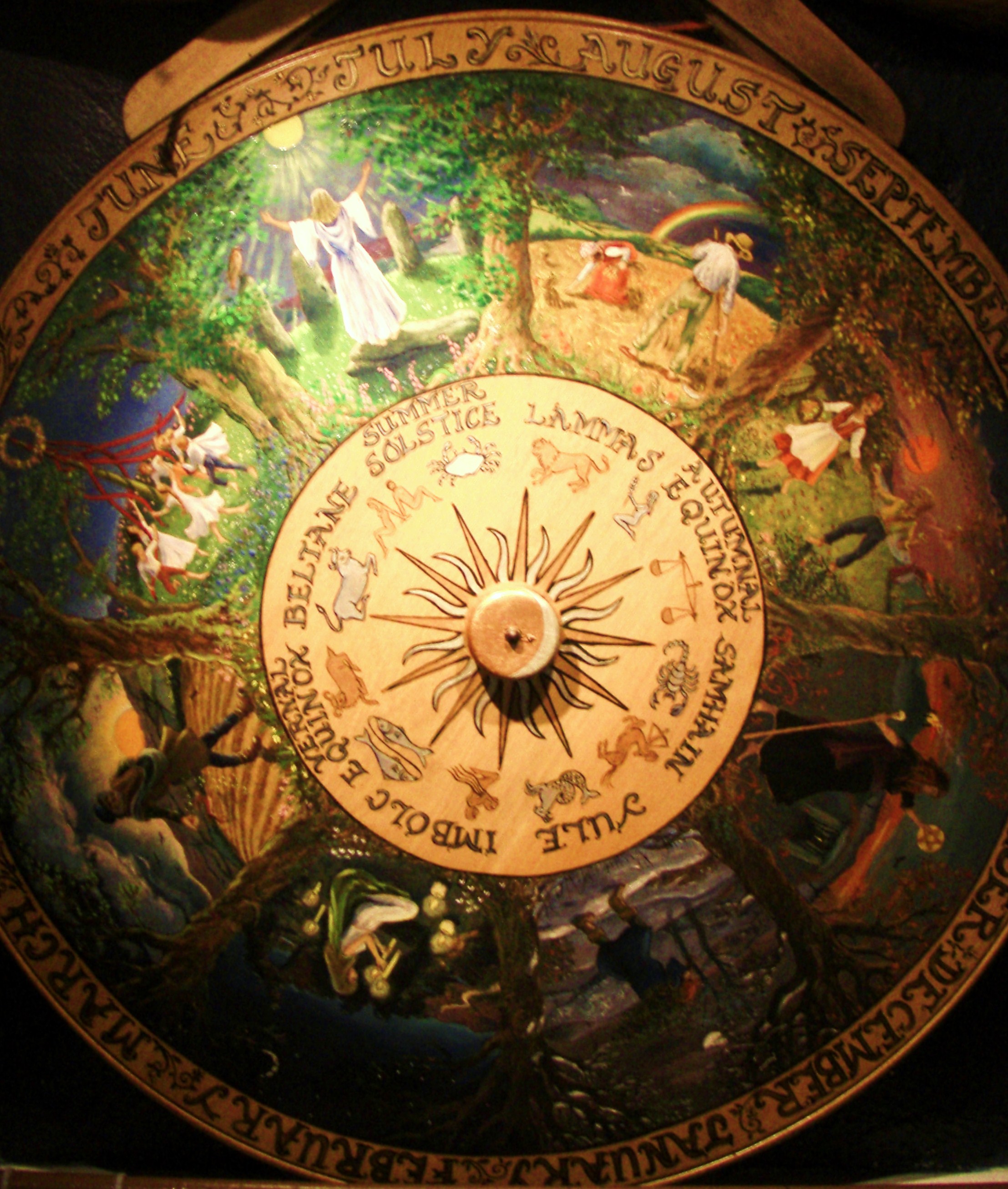
How are things going? What is happening in my spiritual life? In all parts of my life? What is happening in nature? How is what's happening in my spiritual life connected with what's happening in nature? (Is it?)
| Used with permission. http://en.wikipedia.org/wiki/File:Wheel_of_the_Year.JPG |
The spiral of the seasons -- a circle that never quite returns to the same place it was, but keeps progressing through time -- reflects for me the rhythms of life, and also provides a model for my spiritual life and spiritual growth.
Picture a slinky in your hands. (If you have a real-life slinky, feel free to take an actual slinky in your hands!)
Is it a classic silver one, or perhaps one of the rainbow plastic ones?
![]() |
| Used with permission. http://en.wikipedia.org/wiki/File:2006-02-04_Metal_spiral.jpg |
![]() |
| Used with permission. http://commons.wikimedia.org/wiki/File:Slinky_rainbow.jpg |
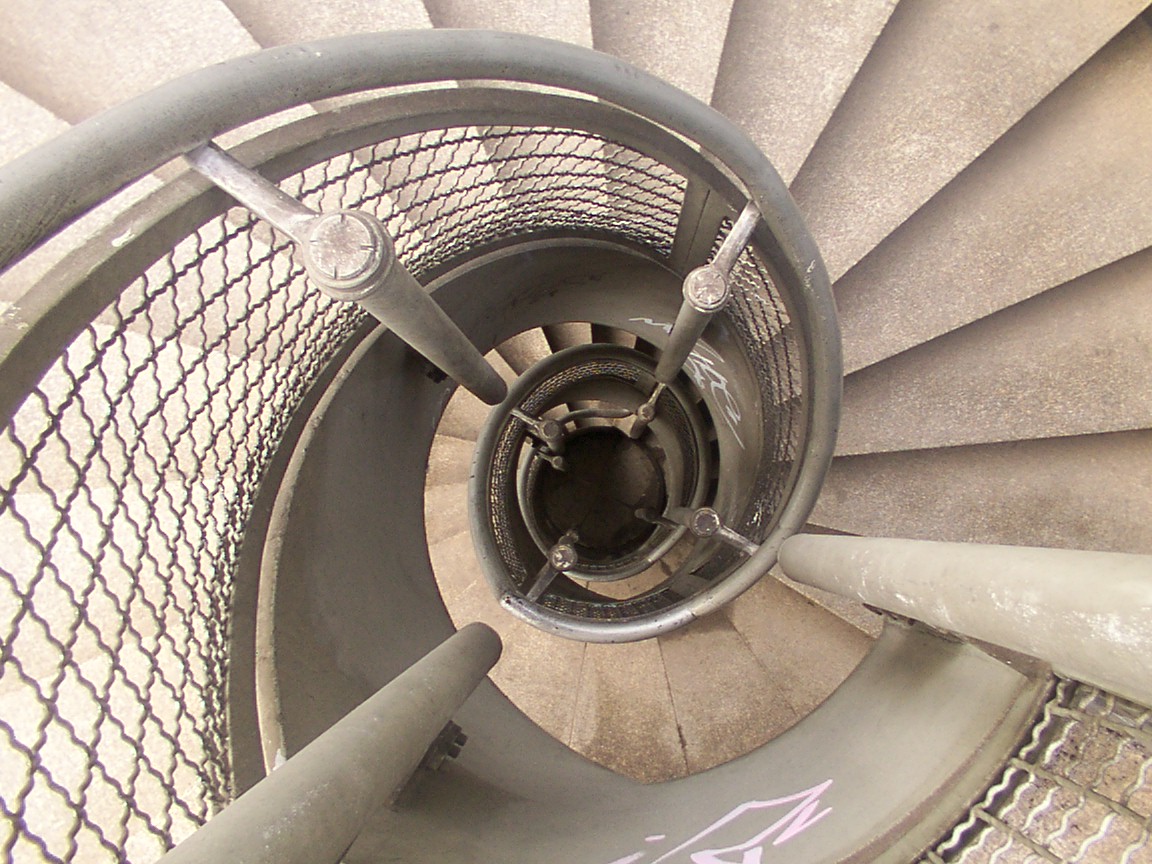
Take the slinky in one hand. Take your other hand, grasp the top, and pull it up; stretch it out vertically, so it looks more like the path a spiral ramp or spiral staircase would take.
| Used with permission. http://commons.wikimedia.org/wiki/File:HK_TST_Urban_Council_Centenary_Garden_%E5%8A%A0%E9%80%A3%E5%A8%81%E8%80%81%E9%81%93_Granville_Road_Spiral_ramp_footbridge.JPG |
![]() |
| Used with permission. http://commons.wikimedia.org/wiki/File:Cologne_spiral_staircase.jpg |
Imagine you are walking along that spiral. As the spiral curves gently upward, imagine Spring Equinox; about an eighth of the way around, imagine Beltane; a quarter around, Litha; another eighth, Lammas; half-way around, Fall Equinox; another eighth, Samhain; three-quarters of the way around, Yule; another eighth, Brigid; and, as you reach the spot directly above where you started, Spring Equinox again.
The repeated cycles of the Wheel of the Year travel in time along this vertical spiral.
At Spring Equinox each year, I might be at the same place on the spiral in one sense. But I am at a completely different place in another sense. Those two loops of the slinky, those two loops of the ramp, those two steps on the staircase, cannot occupy the same place at the same time.
As I have traveled the spiral, I have continued to travel in time -- and hopefully in other ways, too. I'm in a similar place, but it's not possible for me to be in the exact same place.
How does your spiritual life resemble a spiral?
How is the image of a slinky, or a ramp, or a staircase, useful to you? How does it help you?
Sunday, February 3, 2013
Queries for Brigid
It's half-way between Winter Solstice and Spring Equinox, and the days are definitely getting longer.
Have you noticed?
Brigid is the triple Goddess of smithcraft, healing, and poetry.
What creativity are you welcoming into your life?
How is the returning Sun bringing healing into your life?
Thursday, January 31, 2013
presents
Edinburgh's Third Annual
Winter Solstice Celebration
A Celebration of the Darkness and the Light
with Songs and Stories
Saturday, 21 December, 7:00-8:30 pm
Location to be determined
- Songs, stories, candle-lighting, silent meditation, singing, and more
- Suitable for children and adults
- Sliding-scale donation requested to cover the costs of hall hire and supplies; all are welcome regardless of ability to make a donation
- For disability accessibility reasons, please do not wear perfume/essential oils or other personal care products with fragrance
Click here for the Facebook event page: http://www.facebook.com/events/609513809063722/
Contact Stasa for more information
A presentation of A Winter Solstice Singing Ritual by Julie Forest Middleton & Stasa Morgan-Appel.
Book and compact disc available now through the website (click here), or through Stasa, and soon at at bookstores in Edinburgh.
Tuesday, December 4, 2012
Winter Solstice 2012
presents
The 2012
Winter Solstice Celebration
Celebrate the Darkness and the Light
with Songs and Stories
Saturday, 22nd December, 7:00-8:45 pm
doors open 6:45 pm
St. Mark's artSpace
Unitarians in Edinburgh
7 Castle Terrace, EH1 2DP
- Songs, stories, candle-lighting, silent meditation, singing, and more
- Suitable for children and adults
- Sliding-scale donation requested to cover the costs of hall hire and supplies; all are welcome
- For disability accessibility reasons, please do not wear perfume/essential oils or other personal care products with fragrance
More information: http://tinyurl.com/EdinburghWinterSolstice2012
Facebook event page: http://www.facebook.com/events/328798050525074/
A presentation of A Winter Solstice Singing Ritual
Monday, November 12, 2012
Resources from the singing workshop
Here are some resources to follow up:
http://reclaimingquarterly.org/web/chants04/index.html
------------------------------------------------------------------------
http://www.reclaimingquarterly.org/music/music1.html
------------------------------------------------------------------------
http://stasa.net/winter-solstice/buy-a-winter-solstice-singing-ritual-book-and-cd
http://emeraldearth.net/winter__solstice.htm
------------------------------------------------------------------------
http://tinyurl.com/EdinburghWinterSolstice2012
http://www.facebook.com/events/328798050525074/

![[image: candles in the dark] [image: candles in the dark]](https://blogger.googleusercontent.com/img/b/R29vZ2xl/AVvXsEj9dFCafl0IlRFPFKI4_qPTwnYwpS1Jk7hwneuOt5wQK7p4rwQPq6toJ5KWwydFftIKXOoL8SPYhFyfXwgNg_2VZGTYcB5-DsbItLhm8yl1O4Imw007rY9adg_ogfYsbOkQ9I6zNJEFKGs/w320-h213/Candels_in_the_dark.jpg)