Thursday, September 26, 2013

Building the labyrinth, part II: Making the full-size labyrinth

In my last two labyrinth posts, I talked about the process of realizing we could build a labyrinth in the workshop at Gathering (here), and how to draw the labyrinth I decided we would build (here).

In this post, I'm going to talk about how we actually built the labyrinth on campus, in the workshop.  Hopefully this will be useful for anyone else who wants to do this, too! 


Beforehand:

There was a bunch of preparation work that had to be done beforehand.

The first was deciding which labyrinth to build.  I drew lots, and lots, and lots of labyrinths in my Book of Shadows.  I wanted one that was long enough to be an interesting walk (and for people to be able to go into trance / have a worshipful experience while walking), but not too long.

Most of the labyrinth designs I saw were either too long and too big, or too short and too small.

I played with a bunch of different seed patterns, and eventually came up with a slightly non-standard seed pattern, which resulted in this six-circuit Cretan-style labyrinth:

6-circuit Cretan-style labyrinth

(Note: click on any picture for a larger version.)

Next, using guidance from this page -- http://www.labyrinthos.net/layout.html -- I had to determine how wide I wanted the paths to be, and how much total space we would need.

With this labyrinth, by counting the paths across the labyrinth, I could see that the space we would need would be 11 times the width of the paths / aisles. 

I wanted our paths to be three feet wide, so that people who use wheelchairs would be able to use the labyrinth, if their wheelchairs could accommodate whatever surface we'd be on and whatever slope it might have.

Therefore, we needed 33 feet of space.

Now to figure out how much rope or ribbon we needed as the guide for where the lines would go.  The ribbon would need to be as long as the radius of the circle, or half the diameter of the circle.  We've already established that the diameter would be 11 path widths, or 33 feet (see above).  Half the diameter, or the radius, would be 5.5 path widths, or 16.5 feet.  I decided I wanted an extra path width, so the person holding that end of the ribbon had some space.  So:

6.5 paths x 3 ft / path = 19.5 ft of ribbon

Because I live in the UK and was buying ribbon in advance, I needed to know how many cm or m:

3 feet / path x 12 in / ft x 2.54 cm / in x 6.5 paths = 594 cm.  I decided to buy 6 m. 

(Kudos to unit analysis learned in chemistry!)

Supplies needed:
  • tent stakes / tent pegs, to mark the points in the seed pattern
  • a ribbon that is at about 6x the width of the aisles
  • a marker to mark the ribbon
  • a tape measure
  • boundary marker  

There are many materials you can use to mark the boundaries of your paths.  The University where we were doing this wanted us to use field paint, so we did.  (And it was a lot of fun!) 

At this point, before I went any further, I wanted to make sure I really understood this process, and I want to make sure it worked.

I wrote myself a detailed, step-by-step instruction list.  

Then Beloved Wife and I made scale models on paper in our living room.  We took a piece of ribbon, marked it off in 3-inch intervals (1 inch for each foot), took a couple of magic markers, and laid out this labyrinth about three times on big paper on our living room floor.  This was very helpful.

Those two activities together meant I had a very solid understanding of the process, and had the resources to repeat it in large scale and under pressure. 


Beforehand, on-site:

Beloved Wife and I went to the site the Gathering Coordinator had picked, and did the following:

Marked off the ribbon.  First we tied loops on either end of the ribbon, to go around a tent peg on one side, and for a ribbon-minder to hold on the other.  Our paths were going to be three feet.  So our first mark was 1.5 feet from the far end of loop (which I'll call Loop A); the second, 3 feet from the first; and all the rest, 3 feet from the one before it, until we had 7 marks on the ribbon. 

Determined the center of the space so that we would know where the center tent peg was going to go.  Luckily the four trees were nearly equally spaced around the circle, 90 degrees off from each other.  We laid the ribbon down to give us roughly a straight line to follow, and we walked from one tree, heel to toe, across the circle to the one opposite, counting our steps.  Then we walked back half the number of total steps and put a tent stake there.  We did the same with the other two trees -- then had to jiggle a bit to get those two points to agree. 

Put tent pegs in the ground to anchor the seed pattern.   We used 17; we could have used 15, but marking all 17 points gave me additional confidence.

  • We placed the center peg, marked here with arrows, at the center of the space, through Loop A on the ribbon.  
  • We put two pegs 1/2 path-width to either side of the center peg.  This is the first marking on our ribbon.
  • We put two more pegs to the left of the center peg, at 1-width intervals, using the ribbon to show us where.  
  • Turning the right angle counterclockwise, we placed three more pegs at 1-width intervals, using the ribbon to show us where.  
  • We went back to the center peg, this time turned the corner clockwise, and placed three more pegs at 1-width intervals after the corner, using the ribbon to show us where.  
  • We turned the next corner clockwise -- along the "bottom" of the square now -- and placed two pegs at 1-width intervals, using the ribbon to show us where.
  • Next we used the ribbon to measure 1-width intervals to place the pegs in the center of the square. 

tent peg pattern for this labyrinth

Now we got out the field paint and began marking the ground:

-- The ground at the center peg (marked in this diagram with arrows).  This is the peg the ribbon would be anchored to. 

-- The ground at the four corner pegs. 

-- The lines of the seed pattern, as below:

  • Using the ribbon as a guide, we painted from the first peg to the left of the center peg to the next peg "below" it, then from that peg out to the next peg on the right, making the right angle in the upper right corner, and also marking the ground at the base of the tent peg in the upper right corner.  
  • We did the same thing in the diagonally opposite corner, making the right angle in the lower left corner and marking the ground at base of lower left tent peg.  
  • Using the ribbon to guide us to a relatively straight line, we painted the diagonal connecting line between the two middle pegs of the right angles.  
  • We took the ribbon and put Loop A around the tent peg at the top left.  Using the 1-width unit as a guide, we painted from the first peg to the right of it, to the first peg below it, making the curve at the upper left corner.  
  • Similarly, we took the ribbon and put Loop A around the tent peg at the bottom right.  Using the 1-width unit as a guide, we painted from the first peg "above" it to the peg to its left, making the curve at the bottom right corner.

seed pattern for this labyrinth


Now we had the seed pattern set and ready to build the labyrinth in the workshop.

We pulled up all the tent stakes (yes, some of them had field paint on them), and left.


Building the labyrinth as a group:

Now came the time for the group to build the labyrinth.

Volunteers needed:
  • 2 volunteers to mind the ribbon, 1 at each end
  • 6 volunteers to paint the lines (can be done with as few as 1, but it takes longer!)
  • 4 peg minders, one at the center peg, and one at each of the two upper corners and the bottom right corner
  • The person with the overall vision, directing things

(In reality, we had 3 painters at a time, because we had 3 cans of paint to work with.)

I put the stakes / pegs back in around the outside of the square, and put Loop A of the ribbon over the center tent peg (marked here with arrows). 

First swath: 

  • One peg/ribbon minder at the center tent peg, to keep the peg from being pulled out of the ground and the ribbon from getting tangled.  
  • One peg minder at the top left corner.  
  • Three painters, one each starting from the bottom three pegs on the left-hand side of the square.
  • End ribbon minder. 

We started with the ribbon reaching counterclockwise from the center peg, around the top left peg, and down to the bottom left peg.

The end ribbon minder slowly walked the ribbon clockwise, low to the ground, pulling it taut (but not too tight), from the bottom left corner to the top left corner.  The painters followed their marks on the ribbon, spraying the paint on the ground.  The director called for the ribbon to stop when the ribbon came even with the straight line at the top of the square.  The peg minder at the top left corner was the backup person for recognizing when to call the stop. 

Now it looked like this:


labyrinth in progress after first swath is painted

Second swath:

  • Ribbon/peg minder at the center tent peg, to keep the peg from being pulled out of the ground and the ribbon from getting tangled.  
  • Peg minders at the top left corner and top right corner.  
  • Six painters.   
  • End ribbon minder.

The ribbon is stretched out to the left of the center peg.

Because we had three cans of paint, we did this stretch in two parts, the three inner, and the three outer.

The first time through, we had three painters at the first three pegs / first three marks on the ribbon from the center peg; the next time through, three painters at the second three marks on the ribbon, which lined up with where the first painting had left off. 

The end ribbon minder slowly walked the ribbon clockwise, low to the ground, pulling it taut (but not too tight), from the top left corner to the top right corner.  The painters followed their marks on the ribbon, spraying the paint on the ground.  The director called for the ribbon to stop when the ribbon came even again with the straight line at the top of the square.  The peg minder at the top right corner was the backup person for recognizing when to call the stop. 
 
Now it looked like this:

labyrinth in progress after second swath is painted

Third swath:

  • Ribbon/peg minder at the center tent peg, to keep the peg from being pulled out of the ground and the ribbon from getting tangled. 
  • Peg minders at the top right corner and bottom right corner.  
  • Five painters.   
  • End ribbon minder. 

The ribbon is stretched out to the right of the center peg.

Because we had three cans of paint, we did this stretch in two parts, the three inner, and the two outer. 

The first time through, we had three painters at the second, third, and fourth marks on the ribbon from the center peg, which lined up with where the last painting had left off; the next time through, two painters at the next two marks on the ribbon, which lined up with where the last painting had left off. 

The end ribbon minder slowly walked the ribbon clockwise, low to the ground, pulling it taut (but not too tight), from the top right corner to the bottom right corner.  The painters followed their marks on the ribbon, spraying the paint on the ground.  The director called for the ribbon to stop when the ribbon came even again with the straight line on the side of the square.  The peg minder at the bottom right corner was the backup person for recognizing when to call the stop. 
 
Now it looked like this:

labyrinth in progress after third swath is painted

Fourth swath:

  • Ribbon/peg minder at the center tent peg, to keep the peg from being pulled out of the ground and the ribbon from getting tangled. 
  • Peg minders at the top right corner and bottom right corner.  
  • Two painters.   
  • End ribbon minder.

The ribbon is stretched out to the right of the center peg, clockwise around the top right corner, and down the side of the square.

The painters start at the last two marks on the ribbon, painting from where the last painting swath left off.  

The end ribbon minder slowly walked the ribbon clockwise, low to the ground, pulling it taut (but not too tight), from the bottom right corner to the bottom left corner.  The painters followed their marks on the ribbon, spraying the paint on the ground.  The director called for the ribbon to stop when the ribbon came even again with the straight line on the side of the square.  The painters were the backup people for recognizing when to call the stop, which was when their lines joined the ones already painted. 
 
Now it looked like this:

labyrinth in progress after fourth swath is painted

Final bits:

We pulled up all the tent pegs and the ribbon and put them away. 

Now our labyrinth was ready for us to walk!

labyrinth ready to walk after pegs and ribbon are removed


Hopefully, this will be a useful aid for anyone else who wants to use the method of laying out a labyrinth detailed at http://www.labyrinthos.net/layout.html.


Talking about immunity, or, How to help save a child or teen's life

In March, Madga Pescenye at AskMoxie wrote a lovely, and important, piece about helping our kids navigate the world -- "Let's talk about immunity," http://www.askmoxie.org/2013/03/lets-talk-about-immunity.html 

We talked about this piece a LOT in our house, over meals, during housework, sitting on the sofa talking.  And I realized I had something to write about immunity and my experience.  

Earlier in March, Magda had shared a letter she'd written to her sons (reprinted here with permission) about preventing rape.  In the letter, she wrote:

If it’s not safe... leave the room quietly and calmly and call me. I do not care if you’re someplace you’re not supposed to be, or not the place you told me you were, or in Canada or someplace that would normally get you in a lot of trouble. You get immunity if you’re calling for help. My phone is always on, and it does not matter what time of day or night it is. If I don’t pick up right away, call your dad, and the same immunity rules apply. Call one of us and give us the address of where you are and we will come help.

In "Let's talk about immunity," Madga wrote about an email a reader sent her about that letter:

She knew she could go home. I burst into tears reading that for so many reasons. Thinking about how scared she must have been, how worried her mother must have been, how lucky she was, how sad I am that the classmates tried to rape her and no one intervened, all of it.

But the takeaway for me is that she knew she could go home. That's what I want my boys to know, that they can ALWAYS call home and come home, and they can bring anyone who needs to be safe home here where there's always a hug and someone to listen to your story.

Tell me about a time you needed immunity, or got immunity, or gave immunity, please.

This is a story about a time I needed immunity and didn't have it, and the consequences.

This is surprisingly difficult to write.   In order to explain what happened from the perspective of my teenage self, I have to put myself back into that perspective, where I was as a teenager.  It's not a good place.  I also keep finding it's hard to know where to start. 

In theory, I always had immunity when I was a kid and teenager

My parents, my mother especially, made a really big deal out of how I could come to them with any problem, any trouble, and they'd help me; about how I knew I could call any time, day or night, and they would come get me, or take me for help, no questions asked.

But the reality was different.  In reality, I never, ever, had immunity. 

I was nearly always in trouble with my parents and getting punished.  The rules changed all the time, so there was no effective way to keep from getting punished.  Whenever I did bring my parents a problem, they blamed me for bringing it on myself, for getting myself in trouble.  They both blamed me for being bullied in school.  [Trigger warnings to the end of this paragraph.]  My father blamed me for provoking my mother's violence ("She wouldn't hit you if you didn't talk back").  My mother accused me of sleeping with my father.   

I always knew there would be hell to pay if I ever needed something like one of those unconditional safe rides that were so big when I was in high school.  I was supposed to "know better" than to get into those kinds of situations.  My parents said I could call -- that I had better never get myself into that kind of trouble, but that if I did, of course I could call. 

So I always knew that there were conditions, that there would be questions, and most of all, that I would get in huge amounts of trouble if I ever needed that kind of help.

I also knew that if I called for a safe ride, I couldn't count on whomever came arriving any time soon, or being safe to drive.  

If you can't call your parents, you're supposed to call someone else, right?  I knew I'd get in worse trouble if I called some other adult, because then I would have embarrassed my parents by calling someone else, and by letting someone else know I hadn't felt that I could call my parents. 

I had a lot of experience "being in big trouble" with my parents.  The consequences of a safe ride, or going to them or someone else if I was in trouble, were overwhelming.  "Punishment" in my family was terrifying.

I knew never to call my parents, or another adult.  

One night when I was 14, I got stuck between two impossible options: an unsafe situation I couldn't get out of without help, and an unsafe situation if I got in touch with my parents to get me out of it.

There was no way out.  

The guy I was with raped me, then helped me get back into my parents' house without them knowing.

When I was 17, I survived a series of rapes.  When I was 18, I got myself into a survivors' group at the local Rape Crisis Center.

That group saved my life.

Again. 

I had been forced to leave college, and was living with my parents again.  I had to come up with a story about where I was going and why I needed the car for a couple of hours the same night every week.

Finally, I told them the truth.

My mother went on, and on, about how horrible it was that I hadn't trusted her, that I had never told her. 

Looking back at this story, from the perspective of an adult, and not that of a child being brainwashed every day, I see so many things.

I see parents who were abusing their child.  I see parents who were keeping their child isolated to decrease the chances anyone would find out, and to make sure she had no other sources of support, keeping her emotionally and physically dependent on them.  

I see that child abuse put my life in danger, first within my family, then outside it.  I nearly died that night.  But that wasn't the first time, or the last time.

I see how, when I was 14, my "choices" were protection from abusers by a rapist, or protection from a rapist by abusers. 

I see a classic example of how child abuse contributes to an increased risk of sexual assault. 

I see elements in the cascade of consequences that child abuse survivors live with for the rest of our lives.

I see how not having immunity put my life in danger.

Effective immunity could have made such a difference that night.  And not just that night, but for years to come, because the aftermath of rape is life-altering.  

For immunity, you need to know the person picking you up is safe to drive, ie, that they haven't been drinking or taking drugs, that they aren't too angry to drive safely.  I couldn't count on that.

You need to know the person you call for a ride will arrive in a reasonable amount of time.  I couldn't count on that.  

You need to know the adults who are responsible for you won't abuse you because you needed immunity or a saferide.  I couldn't count on that.

Even when kids and teens really, truly can trust their parents or guardians, they are often still afraid of disappointing them.  This is one of those places where having another trusted adult to go to can make such a huge difference. 

I've been very privileged to be able to act as that other adult a few times over the last few decades.  I'm really glad.  It's a privilege.  I'm honored by that trust.  And it's nice to help that happen for someone else. 

Why am I telling you all of this?  There are two things I want you, as you're reading this, to take away from what happened to me:

  • How child abuse puts survivors at risk of sexual assault, abuse, and exploitation.  Some of these ways might never have occurred to you, even if you're well-educated in the effects of child abuse and trauma. 
  • How effective immunity can save someone's life.  Again, some of these ways might not have occurred to you.  

I was really struck, in the comments at Magda's original post, by the parents with kids who can still call their parents for a ride if they need it, no questions asked -- for example, if they've had too much to drink to drive safely.  That's fabulous.

May you, and may the young people in your life, always have immunity.  Always have a sanctuary, someplace.

Monday, September 9, 2013

Building the labyrinth, part I: Laying it out on paper

I posted recently about the labyrinth my workshop built at FGC Gathering this summer.  I promised I'd post a detailed how-to; here it is!

Part I: Laying it out on paper

First, draw the seed pattern.  I used this seed pattern, but modified:

Original seed pattern

I wanted fewer right angles, but still the suggestion of a heart shape in the middle from having some right angles.  Here is the modification: 

First modification to seed pattern
 However, if you create a labyrinth just from this, you end up with too many choice points, and not a simple, straightforward labyrinth.  (Go ahead and try it without this next step; you'll see.)  So, I added a line: 

Modified seed pattern

First connection:

One connection
One connection

Second connection.  Basically, the connections always go from the next unconnected point on one side to the next unconnected point on the other: 

Two connections
Two connections

Third connection:

Three connections
Three connections

 Fourth connection:

Four connections
Four connections
Fifth connection:

Five connections
Five connections
Sixth and final connection:

Six connections (all connected)

Next post: how we laid this out on the grass!

Tuesday, September 3, 2013

Draft of Pattern for V-Shawl in Three Colors

v-shawl in three colors on modelThank you so much to everyone who volunteered to test this pattern for me!

The draft pattern as a .pdf file is available at http://stasa.net/crochet.

There are pictures (and a link to the pattern) on Ravelry: http://www.ravelry.com/projects/stasa/v-shawl-in-3-colors.

There are also now pictures at http://stasa.net/crochet.

Please post questions, feedback, comments, etc., here as you go along.

Thanks again!  Have fun!


Wednesday, August 21, 2013

Spiritual practice peer support group invitation

Is there a spiritual practice you'd like to be doing regularly, but that you find you aren't quite managing to do?

I am putting together a free, 12-week virtual peer support group for people who want to engage in a regular spiritual practice and get support from other people.

- Free.
- On-line.
- Runs for 12 weeks.  

- You pick the spiritual practice you want to do.  It can be almost any spiritually-oriented practice or discipline.  It can be something you do by yourself or something you do in a group.  It can be mostly physical or mostly mental, or a mix.  Everyone in the group can have a different spiritual practice.  Since we're checking in weekly, it will be helpful if it's something you can do at least once a week. 

- Once every week, the group checks in about what happened in the past week and to get support from the others in the group.  Did I meet my goal this week?  What worked?  What didn't work?  If I didn't meet my goal, why not?  Was my goal realistic?  Too hard, too easy, just right?  Does my goal need to change?  How?

- Each group will have 13 people maximum. 

- We will do the check-ins on-line, in a locked blog, a private Facebook group, whatever fashion works best for the group.

- People are welcome from a wide range of spiritual traditions, including none at all. 

This 12-week cycle will start Sunday, 1 September and end Sunday, 1 December. 

If you're interested, let me know by leaving a comment or sending me an email at stasa dot website at gmail dot com.

(If you send email and don't hear back, the cyber-gremlins ate it; please try again.)

Wednesday, August 7, 2013

The Edinburgh Complaints Choir


I am having so very much fun singing with the Edinburgh Complaints Choir, part of the Edinburgh Arts Festival.

I signed up because I have long been a fan of complaints choirs, and I thought it would be fun.  It has been a blast in so many ways!

I think none of us knew the Edinburgh choir would become so popular so quickly, but all of a sudden, we are in high demand!

Places to find us in real life:
Place to find us in print and in video: 
Places to find us on the radio (!):
Find us on Twitter:
In the meantime, enjoy this video:


Tuesday, July 30, 2013

Labyrinths! Thinking outside the box

labyrinth in white paint on green grass, (c) 2013 Stasa Morgan-Appel
At Friends General Conference Gathering this summer, I was scheduled to facilitate an updated version of my workshop "The Goddess Is Alive and Magic Is Afoot."  I was excited, and looking forward to it!

Workshops at FGC Gathering are 13.75 hours, five mornings from 9:00 am to 11:45 pm.  (They used to be 16.5 hours, six mornings.)

My workshop outline called for us to walk a labyrinth on day two.

A number of times over the past ten years or so, someone at Gathering has built a temporary labyrinth on campus.  I was hoping this person, or someone inspired by him, would create a labyrinth this year. But if not, I had a couple of options.  There was supposedly a labyrinth in a church about a mile from this year's campus; I could talk to them and make arrangements for us to go there Tuesday morning.  We could do a spiral walk in our classroom.  We could maybe build a very simple labyrinth in our classroom, with the ever-present blue tape on the carpet.  (I have come to love blue painters' tape.)

I was very sure that building a large outdoor labyrinth was not something we would have time for, and equally sure it was beyond my skill set.

It turns out, I was wrong. Which is a wonderful thing.

About a week and a half before Gathering, I emailed the Gathering Office to find out if anyone was making a labyrinth on campus. No, not this year. 

As I continued finalizing my workshop outline details, I found I wasn't sure I wanted to spend a workshop morning working with an indoor labyrinth in a Christian church.  But I also wasn't really satisfied with any of the alternatives I'd identified, either. 

I posted a query in my social media network for Pagan and Pagan-friendly friends -- here's the situation; here are my options; if you were in this workshop on the Goddess and magic, what would you prefer?  I wasn't looking for anyone to tell me what to do, but I was hoping people's answers would help me sift through all the ideas in my own head and shake something free.

The conversation did way more than that.

A couple people spoke to how walking a labyrinth in a Christian church could be problematic, or work just fine, or both/and.  Someone talked about what a gift it is to the entire Gathering to build a labyrinth.  If my workshop couldn't do it, maybe a Junior Gathering group could.  I started looking at possible labyrinth patterns I could ask someone else to do.  More ideas flowed.  Maybe I and some helpers could do it the day before the workshop started, or the first afternoon of the Gathering.  Maybe we could use a painted dropcloth.  Maybe we could outline it in heavy rope.  Or birdseed.  Or flour or constarch (cornfour) or...  Maybe this.  Maybe that.

Some of the suggestions were completely unrealistic; some were great ideas but not quite "it"... but the whole conversation was super-helpful.  Everybody's contributions got the ideas flowing, and -- most of all -- helped me see I'd been thinking in a box, and that maybe I didn't need to think in that box...

Early in the conversation, one friend shared this video of how to draw a simple Cretan labyrinth, saying (she was right) that she thought I'd be more interested in Cretan ones than Medieval ones:


I suddenly found myself fascinated with drawing labyrinths.  

Later in the conversation, someone shared this page on how to lay out a temporary labyrinth quickly, easily, and with a small group of people:

"Laying Out a Labyrinth," http://www.labyrinthos.net/layout.html

I still didn't see how I could do this in the workshop, but I kept drawing labyrinths.

Then Beloved Wife got home from a professional conference and asked me how my prep was going.  I explained.  She asked more questions.  I showed her my drawings, the video, and the web page.  She studied the how-to.  "Oh, you could totally do this in your workshop, and have plenty of time the same morning to walk it!"  I was dubious at first, but as we talked about it more, I came to the conclusion she was right. 

We played with several different seed patterns.  I wanted something long enough to be interesting, but short enough that we could all walk it in the time needed.  We decided on a seed pattern, and modified it slightly so it would have fewer right angles, and still have the suggestion of a heart-shape in the heart of the labyrinth.

We even laid it out on our living room floor, using ribbon, markers, and really big paper.  It worked!!

I emailed the Gathering Office, apologizing profusely, and said I'd be happy to get in touch with Facilities / Grounds Crew / whoever was appropriate at the University, to find out what it would be all right to use for boundaries -- bird seed, flour, etc.

When I got email back from the Gathering Coordinator, the answer was: I found The Perfect Spot on campus; also, the answer is field paint, and they sold us three cans.  (!!!!!)

(Yes, it's true.  I absolutely had to play with spray paint to build this labyrinth.  Heh heh heh heh.)  (It was wicked fun.)

The afternoon before Gathering started, Beloved Wife and I laid out the seed pattern using tent stakes, a ribbon marked at the appropriate intervals with magic marker, and the field paint.  (This was also a test to make sure I could tolerate the field paint.  It was fine.)

Day two of Gathering, we built the labyrinth in my workshop.  We had a couple of small hitches, but it worked!  Everyone got to participate, either by painting, walking the marker ribbon, making sure the ribbon came around the right pegs without the pegs coming out of the ground, holding space while we did this in a spirit of worship and magic, etc. 

We had just enough space to make aisles that were three feet wide, so people who use wheelchairs or scooters had enough space (and if their chairs or scooters could cope with the grass and the slight slope).  Two of the four trees were outside the labyrinth, two were incorporated; when she had scoped out the space, the Gathering Coordinator was charmed by the idea of including some of the trees, and hoped we would.  Also, and best of all, the space was in shade both morning and afternoon.

Details of how we built it in the next post. 

Now I want to build a labyrinth in our communal back garden at home for Fall Equinox!


Monday, July 29, 2013

Philadelphia Yearly Meeting 2013 Minute of Exercise (more on the Transgender Youth Policy)

Minute of Exercise from Philadelphia Yearly Meeting Annual Sessions 2013:

On 7/25/13, approximately 60 people met to respond to the Transgender Youth Policy which was finalized by the Education Standing Committee (ESC) about a month earlier. The policy was published by the Yearly Meeting a week later and was suspended by the PYM Clerk on 7/24/13. The group included one member of the ESC who was active in creating the policy and one who was not active in creating the policy.

Many feelings were strongly expressed including: shock, hurt, anger, confusion, pain, rejection, and feeling degraded and devalued.

Many Friends were confused by the policy. Much of the policy used strong trans-inclusive language. And yet the requirement to segregate bathrooms and sleeping rooms by "biological sex" was understood by those gathered to be unwelcoming to trans Friends and harmful to them and others.

We heard many concerns about the process that generated this policy. Prior to finalizing the policy, the ESC heard from staff, Young Friends, and about 15 parents and other adults interested in youth programs. The resulting polcy did not reflect the wisdom or desires of these groups.

We kept asking, "Why?" Why was a policy created for a group of Friends who did not unite with it? Why did Education Standing Committee think it necessary to change the long-standing practice of designating bathrooms and sleeping arrangements by gender identity? One member of the ESC suggested that the Committee experienced both a generational barrier and inexperience with transgender issues, and that the Committee failed to overcome these challenges.

We learned that PYM youth staff communicated to the ESC their conscientious objection to the new policy almost three weeks before it was made public. The Committee did not respond to these objections before the policy was published. Why was the Committee unable to engage with these concerns before the policy was made public?

What is needed now:

Friends called for apology, reconciliation, and healing. One ESC Committee member apologized personally. There will be more work for the committee to do in this area.

We need to examine and understand the roots of this problem. What were the structures and institutional habits that allowed this to happen? How could we change our institutional practices to avoid similar problems in the future?

We need to involve Young Friends in any policy changes that impact them. This means that the Young Friends liasion with the ESC should be a Young Friend. Also, ESC will be stronger if it includes young adult Friends who were in the Young Friends program previously and other adults with connections to the Young Friends Program. [This type of "fix" is applicable to all committees: let's follow the principle of "no decisions about us without us."]

Young Friends policies should be developed collaboratively with Young Friends and ESC, and approved by both bodies.
Many Friends suggested that the next version of the policy be drafted by a group of Young Friends who would then send their draft to the ESC. Ideally, the two groups would communicate with each other until unity is found.

Samara Rockwood, co-clerk, Young Friends, Millville Meeting, Upper Susquehanna Quarter
Sebastian DiMino, participant, Young Friends, Fallsington Meeting, Bucks Quarter
Peter Lane, member, Education Standing Committee, Westtown Meeting, Concord Quarter
Carrie Sandler, mother of Young Friends participant, Birmingham Meeting, Concord Quarter
Grayfred Gray, Lancaster Meeting, Caln Quarter
Traci Hjelt Sullivan, Green Street Meeting, Philadelphia Quarter
Walter Hjelt Sullivan, Green Street Meeting, Philadelphia Quarter
Tesla DuBois
Juliette Lane, Westtown Meeting, Concord Quarter


For background on this issue, please see these two links:

Youth Programs Transgender Policy
http://www.pym.org/2013/07/19/youth-programs-transgender-policy/

Transgender Youth Policy Suspended by Action of the Clerk
http://www.pym.org/2013/07/24/transgender-youth-policy-suspended-by-action-of-the-clerk/

Sunday, May 5, 2013

Dancing with the Beloved Dead at Beltane

It seemed like an odd time of year to be thinking about death.

It's spring; life is bounding forth.  It's Beltane, a welcoming of spring and celebration of all the new and returning life in nature.

But two things happened: I was getting ready to go to the semi-annual gathering of the Quaker Concern Around Dying and Death (QDD), and one of my social networking friends shared a new video, from the last week in April, of one of my favorite Samhain songs.


I found myself listening to it over and over.

'Cause when I die
I don’t want to rest in peace
I want to dance in joy
I want to dance in the graveyards, the graveyards
And while I’m alive
I don’t want to be alone
Mourning the ones who came before
I want to dance with them some more
Let’s dance in the graveyards
~ from “Dance in the Graveyards,” (c) Ian Holljes; recorded by Delta Rae on “Carry the Fire,” 2012

Walking the labyrinth at Woodbrooke Quaker Study Centre just before our gathering started, I remembered the Beloved Dead whom Roses, Too! Coven always honored at Beltane.  Several people we love died just before Beltane, or had special connections for us with Beltane or May Day, and we always named them, and tied a black ribbon onto our May Pole for them.

Walking the labyrinth, Spring abundant around me, I was also reminded that at Beltane and Samhain, the veil between the worlds is thinnest.  And while we may not expect visits from the Beloved Dead at Beltane, death and life are part of each other, and if the dead come calling at Beltane, let us dance in joy with them, around the May Pole and in the graveyards.  


Thursday, May 2, 2013

Is your spiritual path a labyrinth?

First off, yesterday was Beltane and I was somewhere warm.  That was wonderful.  (What's "warm"?  Er, 15 C / 59 F.  My, how my standards have changed...)

Yesterday afternoon I was walking an outdoor, grass labyrinth (in the warm sun, mmmm).  There was a moment when its path took me very close to the center.  But suddenly, it changed direction and took me back much closer to the outer edge.  Dramatically. 

I was very much struck by the example of the labyrinth as spiritual path. 

Right that moment, following the path took me physically further away from the center.  Yet at the same time, it took me closer towards the center in terms of the process of the labyrinth, the path of the labyrinth.

I feel like this describes an awful lot of life.  And an awful lot of spiritual life.

Also: this labyrinth was generously dotted with goose poop.  I got to decide to step on it or around it. 

Does your spiritual journey ever feel like a labyrinth?  Does it ever feel like a labyrinth dotted with goose poop?

May all the goose poop in your life become fertilizer. 

Monday, April 29, 2013

A spiritual check-in at Beltane

At 9:30 tonight, it was not yet fully dark, and the sky was an amazing deep, bright color, somewhere between deep turquoise and indigo. 

Where I live, the Sun set today at 7:48 pm.  And tomorrow, there will be four more minutes of daylight than there were today.

Tomorrow is May Eve, when some traditions celebrate Beltane; others wait until the following day, May Day itself. 

Happy Beltane!  Happy May Day! 

What is happening in nature where you live right now, this time of year?  What animals, plants, flowers, insects do you see?  How is that different from what was happening in mid-March?

What is the Sun doing where you live right now?  Has its angle in the sky changed since Spring Equinox?  How much longer are the days than they were in mid-March?  (For some help with this one, see this nifty set of tools at the US Naval Observatory: http://aa.usno.navy.mil/data/.  You don't need to be in the US!)

What do Beltane and May Day mean to you?  Are they the same, or different?  

Weaving a May Pole is common in many cultural and religious traditions this time of year.  What are you weaving into your life now for the next year, over the next year? 

Ravenna Ravine May Pole, 2009.  (c) Stasa Morgan-Appel
Ravenna Ravine May Pole, 2009.  (c) Stasa Morgan-Appel

Weave, weave, weave, weave
Women weave the web of life
Sisters everywhere are weaving
Goddess every one.  
~ (c) Roses, Too! Tradition; to the tune of "Rose, Rose / Dear friend"

Welcome, Spring!

Tuesday, April 16, 2013

On Violence and Language (the Day After the Explosions at the Boston Marathon)

I wrote this for my friends on Facebook.  And then people kept asking me if they could share it.  I am honored.  

Also, I am grateful to my professors in Third World Politics at UMBC for helping me to learn to think critically about these issues, and to Professor Clark R. McCauley at BMC for the opportunity I had to do research under his guidance into the development and prevention of violence in political movements. 

- sm

Beloved friends,

When you find yourself wanting to use the word "terrorist" right now in the wake of the explosions at the Boston Marathon, I invite you to think first.

"Terrorism" is political violence, whether it's violence from below (guerrilla groups) or violence from above (governments). "Terrorism" is not actually a catch-all term for senseless, deliberate violence inflicted by people on other people, though that's how we've come to use it.

What happens if, instead of using the word "terrorism," you use the phrase "political violence"? What does that do to the ways you think about and understand the situation, whether it's what happened in Boston, or another situation?

Contrary to popular belief, we cannot read the minds of those who perpetrate violence, though it's very tempting, because it allows us to make them "other" -- Not Like Us -- and easier for us to think we would never do such a thing.

But that is dangerous, for several reasons. One is that incorrect assumptions make it harder, not easier, to prevent future violence, and when we pretend we can read minds and therefore know motivations, we are making incorrect assumptions.

But one of the most important ways this is dangerous is that the primary thing which makes such violence possible is Other-ing. Specifically, seeing people as Other to the point where they are no longer considered fully human. Where we might not commit violence against other human beings, it's easier to commit violence against pigs.

Language choice is an essential step in this process towards violence.

I am not making this up. Decades of research into political violence, some of which I have been part of, bear this out.

So in the midst of this hurt and shock, I invite you to think. And I invite you to refuse to perpetuate the cycle of violence in the language you use.

Love and blessings,
Staṡa Morgan-Appel

-----------------

(c) 2013 Stasa Morgan-Appel.  Permission to reprint with attribution.  
And please do leave a comment here with the link!

Monday, April 15, 2013

An open letter to Gavin Brown, MSP

Dear Gavin Brown,

Over the weekend, "Scotland for Marriage" put a horrible pamphlet through our letter slot urging residents in our area (Newington/Grange) to contact you about proposed equal marriage. 

The pamphlet is full of fear-mongering and threats.  A more accurate name for this group would be "Scotland for Marriage Discrimination." 

I am writing to tell you that our family support equal marriage.  We find this to be a matter of civil liberty and religious liberty. 

People's rights should never be subject to popular vote.  Homophobia should not be protected legally. 

I direct your attention to several responses to both consultations by religious groups who wish to perform same-sex marriages as a matter of religious liberty.

Thank you for your attention to this matter.

Best wishes,
Stasa Morgan-Appel

------------------------

UPDATE:  I received the following email from the Equality Network, whom I had notified about the flier campaign.  - sm

Hi Stasa,

Thank you for bringing this to our attention. 

We have been made aware of similar leaflet campaigns in other areas across Scotland.

The Equality Network is encouraging supporters of equal marriage to contact their MSPs using our online email tool: http://www.equalmarriage.org.uk/takeaction 

In the coming months, as the Marriage and Civil Partnership (Scotland) bill is introduced to the Scottish Parliament, we will be launching a new campaign drive to ensure that the voice of those supporting equal marriage is not lost.

Unfortunately we do not have the level of funding that Scotland for Marriage are able to utilise to produce and distribute their mass leaflet campaign. We know that Scotland for Marriage have, by their own admission, spent at least £60,000 and possibly a lot more on their campaign against lesbian, gay, bisexual and transgender (LGBT) equality.

In contrast, the Equality Network has only been able to spend a fraction of this amount as we rely on individual donations to fund the Equal Marriage campaign.

Please encourage your friends to contact their MSPs, and if you are interested in fundraising for the campaign do let us know and we'll do what we can to support your efforts!

Thanks for your help!

Best wishes,

Tom

Tom French

Policy Coordinator,
EQUALITY NETWORK


T: 0131 467 6039 
M: 07502 214 598
Tw:@equalmarriage
 
The Equality Network is a company limited by guarantee (SC220213) and a registered Scottish charity (SC037852) both at 30 Bernard Street, Edinburgh, EH6 6PR.  

Take action for Equal Marriage:

You can now donate directly to the Equality Network's Equal Marriage campaign: 


Mobile: Text 'LGBT77 £10' to 70070 

Tuesday, April 2, 2013

The Wheel of the Year & the Slinky of Spiritual Growth

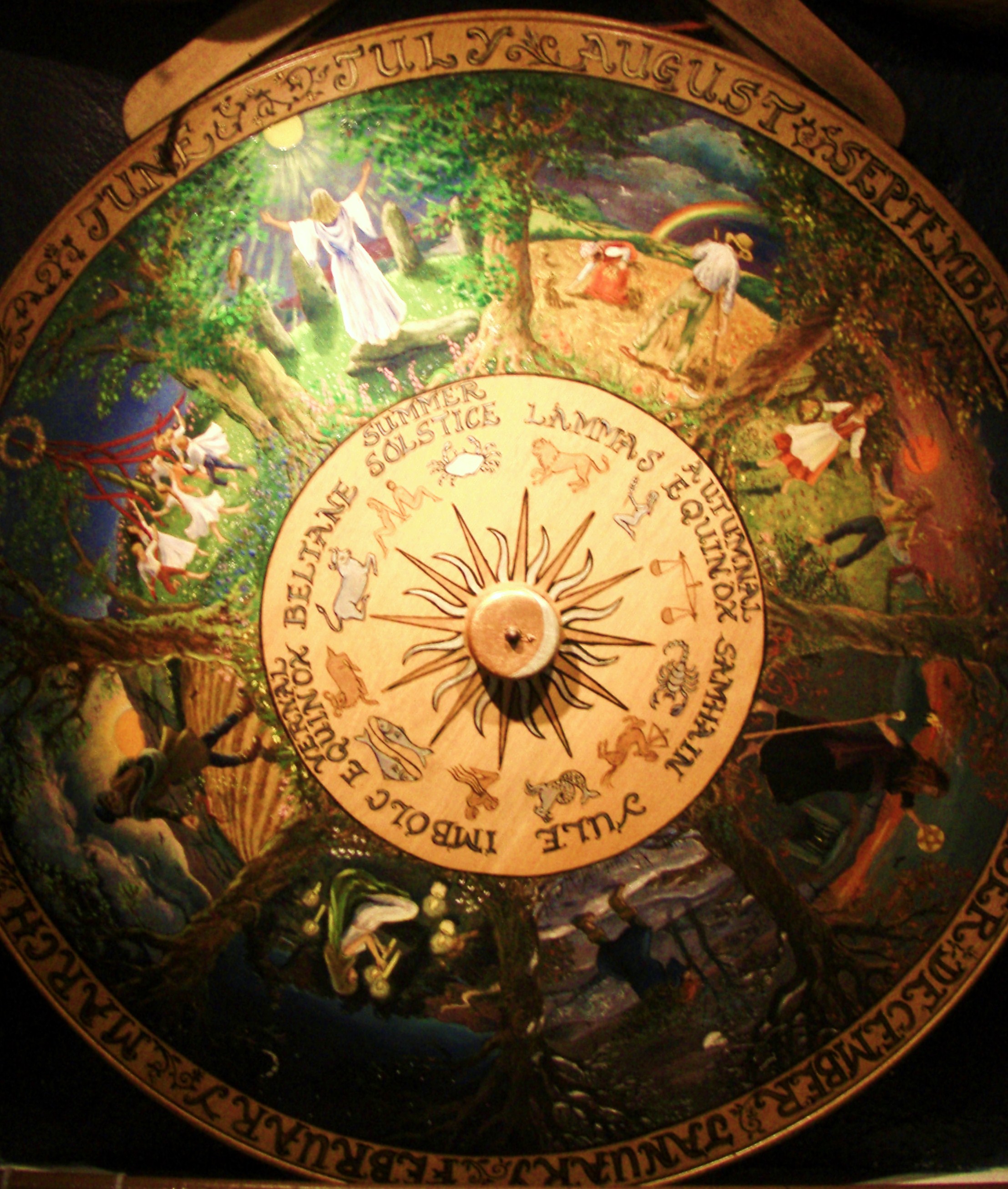
The eight spokes on the Wheel of the Year are lovely waypoints for me to check in spiritually -- with myself, with my spiritual friends, with That-Which-Is.

How are things going?  What is happening in my spiritual life?  In all parts of my life?  What is happening in nature?  How is what's happening in my spiritual life connected with what's happening in nature?  (Is it?)  

A photograph of a painted Wheel of the Year from the Museum of Witchcraft, Boscastle
Used with permission. http://en.wikipedia.org/wiki/File:Wheel_of_the_Year.JPG

The spiral of the seasons -- a circle that never quite returns to the same place it was, but keeps progressing through time -- reflects for me the rhythms of life, and also provides a model for my spiritual life and spiritual growth.

Picture a slinky in your hands.  (If you have a real-life slinky, feel free to take an actual slinky in your hands!)

Is it a classic silver one, or perhaps one of the rainbow plastic ones?

classic silver slinky in arc shape
Used with permission.  http://en.wikipedia.org/wiki/File:2006-02-04_Metal_spiral.jpg

rainbow plastic slinky in arc shape
Used with permission.  http://commons.wikimedia.org/wiki/File:Slinky_rainbow.jpg

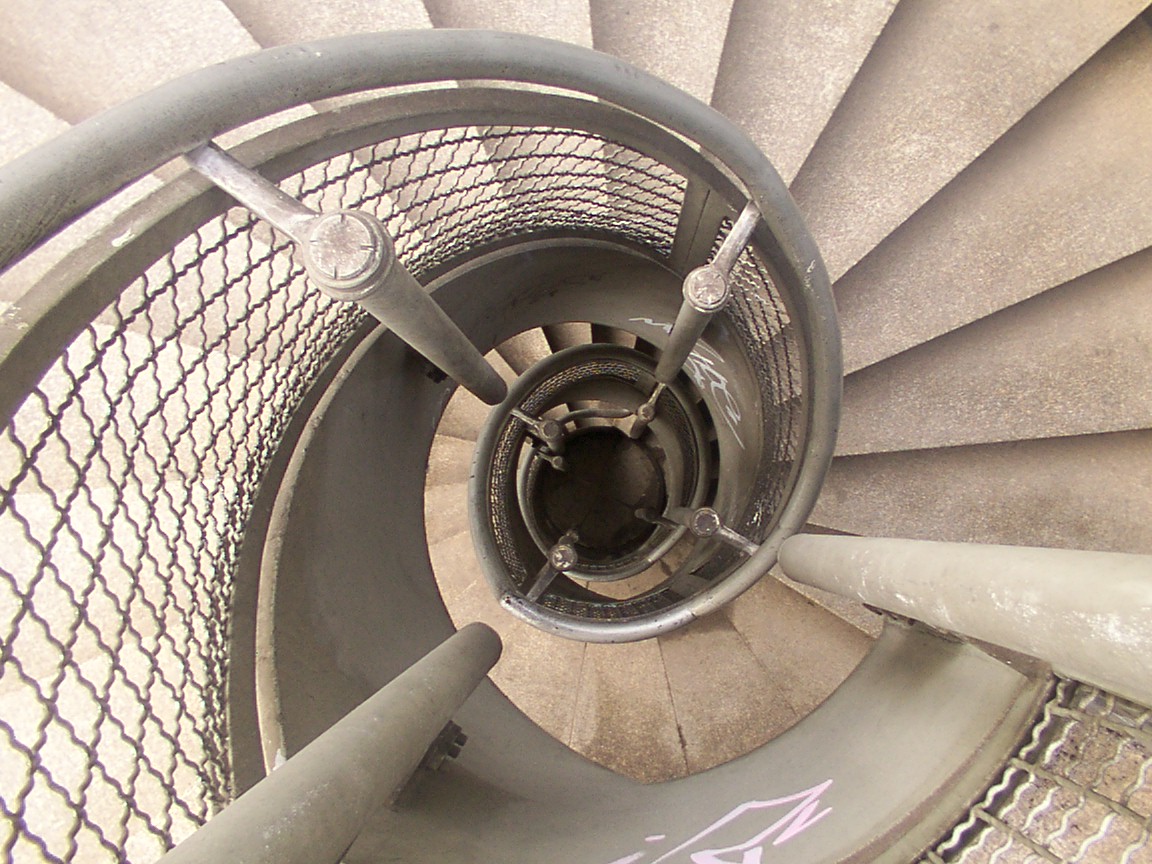
Take the slinky in one hand.  Take your other hand, grasp the top, and pull it up; stretch it out vertically, so it looks more like the path a spiral ramp or spiral staircase would take. 

Granville Road Spiral ramp footbridge
Used with permission.  http://commons.wikimedia.org/wiki/File:HK_TST_Urban_Council_Centenary_Garden_%E5%8A%A0%E9%80%A3%E5%A8%81%E8%80%81%E9%81%93_Granville_Road_Spiral_ramp_footbridge.JPG

Spiral staircase in Cologne Germany
Used with permission. http://commons.wikimedia.org/wiki/File:Cologne_spiral_staircase.jpg

Imagine you are walking along that spiral.  As the spiral curves gently upward, imagine Spring Equinox; about an eighth of the way around, imagine Beltane; a quarter around, Litha; another eighth, Lammas; half-way around, Fall Equinox; another eighth, Samhain; three-quarters of the way around, Yule; another eighth, Brigid; and, as you reach the spot directly above where you started, Spring Equinox again. 

The repeated cycles of the Wheel of the Year travel in time along this vertical spiral.

At Spring Equinox each year, I might be at the same place on the spiral in one sense.  But I am at a completely different place in another sense.  Those two loops of the slinky, those two loops of the ramp, those two steps on the staircase, cannot occupy the same place at the same time.

As I have traveled the spiral, I have continued to travel in time -- and hopefully in other ways, too. I'm in a similar place, but it's not possible for me to be in the exact same place. 

How does your spiritual life resemble a spiral?

How is the image of a slinky, or a ramp, or a staircase, useful to you?  How does it help you? 

Wednesday, March 27, 2013

Gratitude to Alexandria Goddard and Jane Doe

There are two women I am feeling particularly grateful to right now: Alexandria Goddard and Jane Doe.

Last week, my social networking feeds and news feeds were all lit up with, first, news of the sentencing in the Steubenville, OH rape cases, and then, with reactions: to the sentencing, to the news coverage of it, and to rape culture overall. 

Countless women, male allies, and genderqueer people reared up and thundered: We have had enough of rape culture.  We have had enough of rape apology.  We are not standing any more for cultural narratives that normalize or explain away this kind of violence. 

It was the first time in my life that I had ever been surrounded by that much no-holds-barred, unapologetic, outrage and advocacy.

I have been active in feminist causes and anti-violence work for almost 30 years now.  There are plenty of times before now when I have been surrounded by amazing, loud, unapologetic feminist women and allies.

But never in my life until last week was I ever surrounded by such a huge, huge swell of us -- and such a mainstream swell of us. 

There are two women I am particularly grateful to for making this open, vocal outrage and advocacy work possible.

One is Alexandria Goddard, the blogger and former Steubenville resident who worked so persistently to bring the perpetrators to the awareness of both the public and law enforcement.  Goddard didn't give up even when her own personal life was affected and when she received death threats and was sued.  Goddard's work has very much helped shape the cultural discussion of this case. 

You can read Goddard's story here:  http://www.xojane.com/issues/steubenville-rape-verdict-alexandria-goddard

The other is Jane Doe, the victim and survivor of the rapes this case is all about.  Her persistence, courage, and integrity were instrumental in moving the cases forward, securing convictions, and in shaping the cultural discussion.

Thank you both.  I am grateful. 

Monday, March 25, 2013

Reprint from Ask Moxie: A Letter To My Sons About Stopping Rape

A Letter To My Sons About Stopping Rape

Dear Boys,

Some really horrible things happened to someone who could be one of your friends, and it was done by some people who could be your friends. You're 11 and almost-8 now, so the incident that made me write this letter isn't something you've heard about, but this stuff keeps happening, unfortunately. So I need to talk to you about it.

First of all, I know we talk all the time about how special your bodies are, and how you’re one who gets to decide what to do with your body. I’ve never made you put anything in your mouth that you didn’t want to, or touch anyone you didn’t want to, or talk to anyone you didn’t want to, because I wanted you to understand that you and you alone control your boundaries. We worked on blowing a kiss so you could show that you liked someone without having to touch them, and high fives if you were ok touching them but only with your hand. We talked all the time about not letting people tell you that what you wanted was wrong or that they knew better, and that you should always always tell your dad or grandma or me if anyone makes you feel uncomfortable.

And we talk all the time about making sure that if you’re touching someone else that they want you to be touching them. That if they say “No” you have to stop right away (even if it’s just fake-punching your brother) and that even if they aren’t saying “No” you need to make sure they’re still enjoying it. You know how sometimes you like to be tickled and sometimes you don’t? Well, everyone’s like that, so even if they liked it when you did it yesterday, you should still make sure they really want you to today, whatever kind of touching it is.

Now I’m going to talk about sex. I know you know “how it works” because we’ve been talking about it ever since you two were little, since before you could read, and you know all about sperm and eggs and penises and vaginas and vulvas and orgasms and condoms and all that. And I know I told you it feels good and you had a hard time seeing how that could be true but took my word for it. Well, the thing I didn’t tell you is that it feels unbelievably amazing when you’re doing it with someone who really wants to be doing it with you. Like , better than popcorn followed by ice cream, or a Supah Ninjas marathon, or two snow days in a row. You know how excited I get when I get a new pair of shoes? It’s like 500 times better than that, when the person you’re doing it with is so excited to be doing it with you that they start asking you for it.

This is what I want you to wait for. I want you to wait to have sex until the person you’re with asks you for it. Tells you they need you now, and that they can’t wait, and they want it. Calls you by your name and asks for it.

If you’re ever in a situation in which someone is asking you for it and you don’t want to have sex with that person, don’t do it. And if you’re ever in a situation in which you want to have sex but the other person doesn’t ask you for it, don’t do it. It’s only good if you both want it, and can tell each other you want it, and are sure you both want it. Otherwise someone’s going to get hurt. And romance is weird enough without hurting other people when you can stop yourself (and you can always stop yourself -- that goes along with having opposable thumbs).

This letter is almost over but this next part is super-important: Not everyone you know has been taught all the stuff we’ve talked about. You are going to know people, and maybe even be friends with people, who think it’s ok to hurt other people in a lot of ways. One of those ways is sex. I know you’re going to hear other boys say things about girls, or sometimes about other boys, that means they don’t care about those girls’ feelings or bodies. When you do, I need you to step in. All you have to do is say something like, “Dude, that’s not cool” or something that lets the person saying something nasty know that it’s not ok. Remember that everyone wants to fit in. If you can take control of the mood in the room by letting them know nasty talk isn’t ok, they’ll stop so they don’t look like an idiot.

Remember how we talk all the time about how we’re the people who help, who fix things when there’s a problem or someone’s in trouble? You may get the chance to do that someday. Because those boys who say nasty things about girls may actually do something to those girls. If you are ever anywhere where boys start hurting a girl, or touching her in any way that she doesn’t want, you need to step in. If she’s asleep or drunk or passed out or drugged and can’t say “no,” you need to step in. Remember, it’s not good unless both people can say they want it. If a girl isn’t saying anything, that doesn’t mean she wants it. If she isn’t saying specifically that she wants it, then it’s wrong.

Here’s how you should step in:

  1. If it’s safe for you to say something, say something. In a loud, commanding voice, tell the guy who’s doing it to stop, and make sure he knows it’s not ok and he can’t be an asshole (sorry to curse, but by the time you’re in this situation you’ll be cursing, too). Then help the girl get to someplace safe, and call her parents. (Even if she thinks she’s going to get in trouble, call her parents. If they’re mad at her, I can talk to them and take care of it.)
  2. If it’s not safe for you to say something, leave the room quietly and calmly and call me. I do not care if you’re someplace you’re not supposed to be, or not the place you told me you were, or in Canada or someplace that would normally get you in a lot of trouble. You get immunity if you’re calling for help. My phone is always on, and it does not matter what time of day or night it is. If I don’t pick up right away, call your dad, and the same immunity rules apply. Call one of us and give us the address of where you are and we will come help. Then hang up and call 911. Tell them the address and that there’s an assault going on. They might want you to stay on the line with them until the police get there.
  3. Even if you don't like the girl, step in. Even if she's been mean to you or snobby, or someone told you she did something you think is gross. No matter what she did, no one should hurt her. If you step in, the next day you can go back to hating her. If you don't step in, well, how are you any different from the loser who's hurting her? You know who you are. Step in.
  4. Do not worry that everyone will hate you if you stop the cool kids from doing something. Stopping someone from hurting another person makes you a hero. This is what you’re here to do. And if there are people who don’t like it, screw them. Your dad and I will do anything it takes to make sure that anyone who doesn’t like your being a hero stays away from you and keeps their mouths shut.

We have been practicing for this for a long time, for being the ones who help.

Remember when we were in the middle of the knife fight on the subway and we got the other mom and kid out of the way? Remember when we helped my friend move away from her scary husband? Remember all those times we took pictures of those freaky dudes staring at the little kids at the playground? We’ve been practicing to step in and help someone else. You can do it. I have faith in you.

Love,
Mom

--------------------------------

Magda Pecsenye
http://www.askmoxie.org/2013/03/a-letter-to-my-sons-about-stopping-rape.html
@AskMoxie
reprinted with permission

--------------------------------

Thank you, Magda. - sm

Wednesday, March 6, 2013

An Epistle from Friends for Lesbian, Gay, Bisexual, Transgender, and Queer Concerns, Midwinter Gathering 2013

An Epistle from Friends for Lesbian, Gay, Bisexual, Transgender, and Queer Concerns, Midwinter Gathering 2013

To All Friends Everywhere,

We send you love and best wishes from Friends for Lesbian, Gay, Bisexual, Transgender and Queer Concerns Midwinter Gathering, held from February 15-18th, 2013, at the Bryn Mawr Mountain Retreat and Conference Center in Honesdale, Pennsylvania.

We unpacked the theme – A Place at the Table – in a series of plenary sessions under the skillful facilitation of Niyonu Spann. This theme proved to be a provocative metaphor that led us to examine how our experiences of power, privilege, and inclusion inform our perception of how big the table is, how it is set, who gets to sit at it, and how they are to behave. We were encouraged to notice individual, group, and societal patterns and tensions around race, class, gender identity, and sexual orientation – and beyond.

The planning committee was determined that we would do more than discuss power, privilege, and inclusion; awareness of these dynamics would inform the process of creating an expanded and more inclusive Gathering. Our community was blessed by the extensive outreach done by the planning committee, which brought more children, young adults, people of color, allies, teenagers, racial justice workers, and non-Quakers to our Gathering, almost doubling our attendance over last year.

Spirit invites everyone to come to the Table of the Beloved Community. We are asked to participate as our authentic selves, with our wounds, and gifts, and imperfections. We were fed and challenged by the Spirit and each other as we wrestled with the reality that there are those who do not feel invited or feel they cannot bring their whole selves to the table. Many of us have had the experience in our religions of origin that to acknowledge our sexuality or gender identity would sever our relationship with the Spirit. We have found the opposite is true: that accepting and expressing our true selves only serves to strengthen our connection with the Divine.

We are determined to continue the struggle, knowing that we will be challenged by what it will take to be faithful to our vision of radical inclusion. As we continue our commitment to realize what radical love demands of us, we ask that you hold us in the Light.

On behalf of Friends for Lesbian, Gay, Bisexual, Transgender and Queer Concerns,
Wendy Sanford and Ted Heck, co-clerks

Monday, March 4, 2013

Friends (Quakers) for Lesbian, Gay, Bisexual, Transgender, and Queer Concerns Endorses Friend of the Court Briefs in Two Supreme Court Cases -- Announcement

[UPDATE: Briefs are available to read here.] 


Friends for Lesbian, Gay, Bisexual, Transgender, and Queer Concerns (FLGBTQC) has signed friend of the court briefs filed filed by law firm Kramer Levin on behalf of a range of religious organizations in two cases before the US Supreme Court this term.

From the announcement by Kramer Levin:

Kramer Levin has filed a pair of amicus briefs on behalf of a broad-based coalition of religious organizations in the historic LGBT rights cases now pending in the U.S Supreme Court...

Confronting and rebutting arguments by religious supporters of DOMA and Proposition 8 purporting to state a uniform religious position on marriage, the briefs document the growing range of religious traditions that respect the dignity of lesbian and gay people and their families; solemnize or otherwise honor their relationships; and support civil marriage equality. And stressing the distinction between religious and civil marriage, the briefs make clear that respecting the marriage rights of same-sex couples will not impinge upon religious beliefs, practices, or operations, but rather will prevent one set of religious beliefs from being imposed through civil law.
http://www.kramerlevin.com/Kramer-Levin-Files-Briefs-in-Historic-Supreme-Court-LGBT-Rights-Cases-02-27-2013/

The entire announcement is well worth reading.  

From the briefs:

Amicus curiae
Friends for Lesbian, Gay, Bisexual, Transgender, and Queer Concerns (“FLGBTQC”) is a faith community within the Religious Society of Friends. FLGBTQC deeply honors, affirms, and upholds that of God in all people. 

Links:
(Please note, not all the briefs filed in these cases have been uploaded to all the tracking websites yet.)

Please see related post "Friends (Quakers) for Lesbian, Gay, Bisexual, Transgender, and Queer Concerns Endorses Friend of the Court Briefs in Two Supreme Court Cases -- Details" at http://aquakerwitch.blogspot.com/2013/03/friends-quakers-for-lesbian-gay.html